By Richie Panganiban | Marie Ysabel Panagsagan
The participation of homegrown clergy made this year’s CFC Clergy and Lay Congress even more meaningful and memorable. The annual event was held on June 18, 2026, Space at One Ayala in Makati City, with the theme “One in Christ in His Heart for the Poor,”
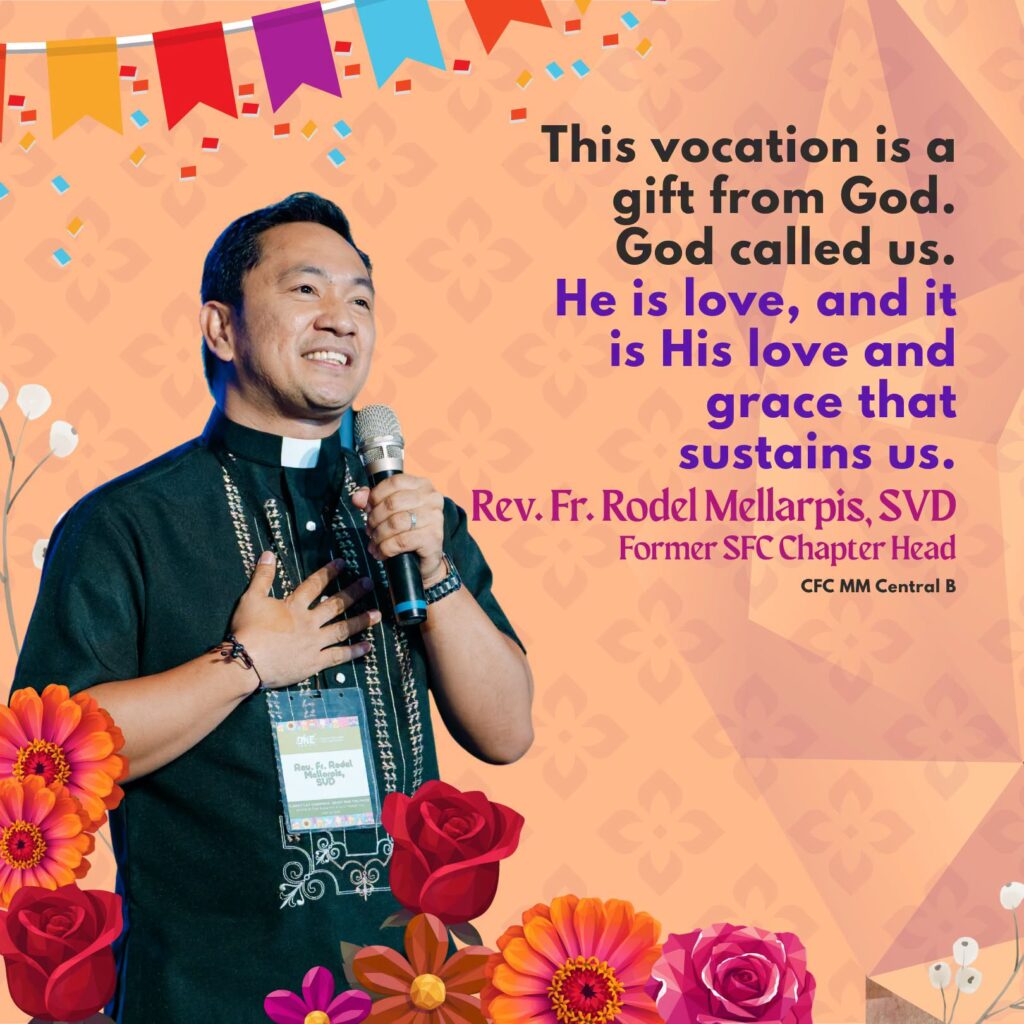
The event began with a vibrant opening worship, energetically led by Rev. Fr. Rodel Mellarpis, SVD, a former SFC Chapter Head who was ordained as a missionary priest of the Society of the Divine Word last February 14.
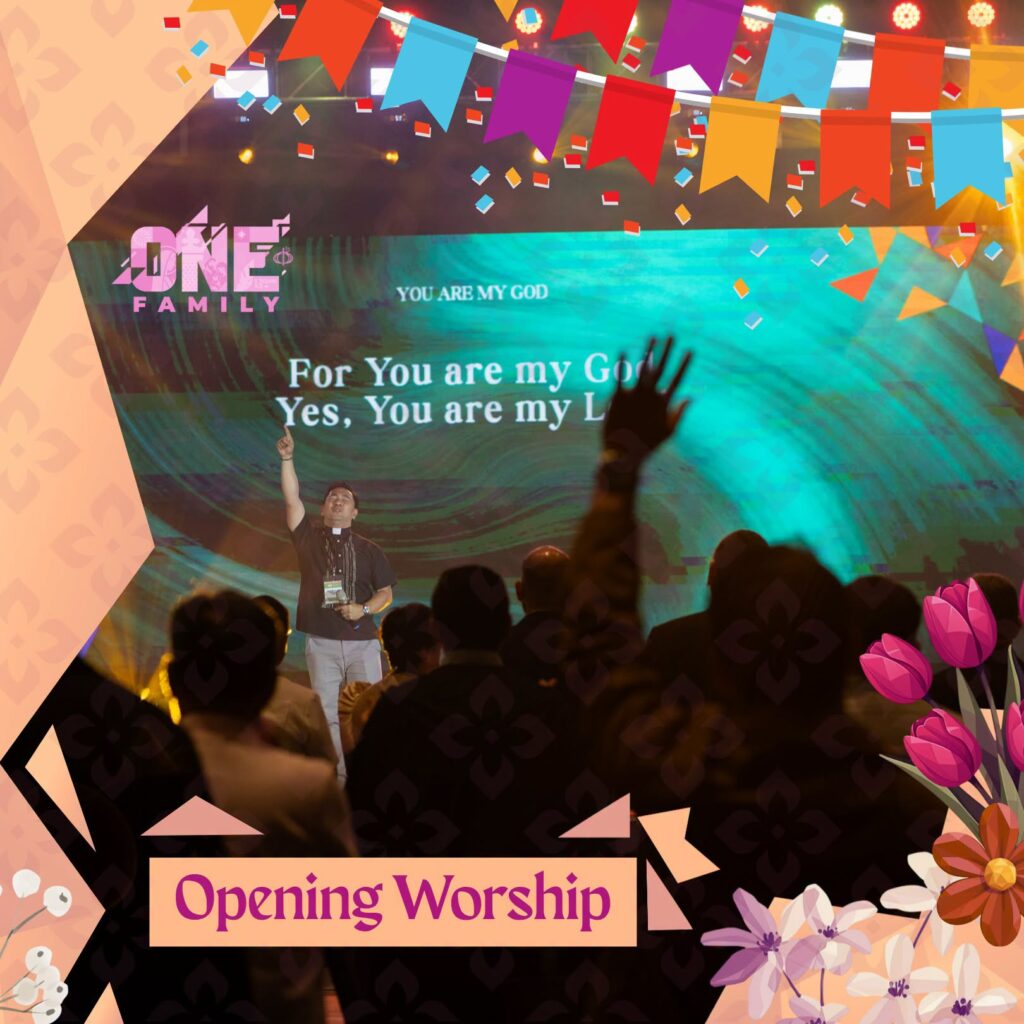
One Team, One Mission
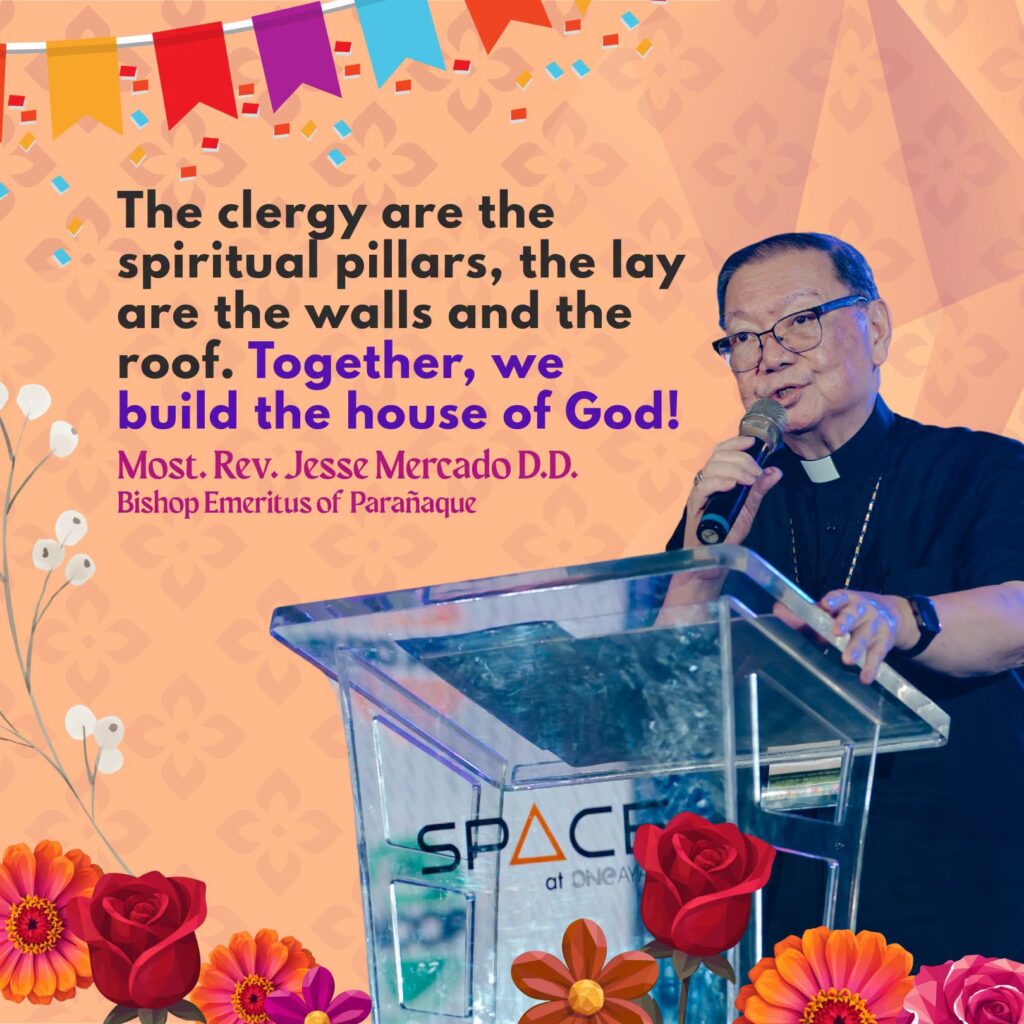
In the Opening Message that followed, Most Rev. Jesse Mercado, D.D., Bishop Emeritus of the Diocese of Parañaque, highlighted the joint mission of the clergy and the lay, which he described as one family, one mission, and one heart, as opposed to two separate teams. “Clergy and lay are to move forward in mission,” he emphasized. “The clergy are the spiritual pillars; the lay are the walls and the roof. Together we build the house of God.”
While priests bring the sacraments, the lay bring their witness, and together they bring the life and joy of Christ not just to the materially poor but also to the lonely, the forgotten, and the spiritually hungry. Through this unity, love, and shared mission, people may hopefully encounter Jesus many times. He ended his message with a prayer for unity and humility in service for both the clergy and the lay.
Builders of God’s Kingdom
CFC Chairman and President Arnel Santos then came on stage to welcome the clergy present, which included a number of bishops, 49 priests, 57 nuns, and 753 CFC delegates, including members of YFC and SFC. He acknowledged in particular the guests from the Vatican: Most Rev. Dario Gervasi, Adjunct Secretary of the Dicastery for Laity, Family and Life, and Rev. Fr. Giovanni Buontempo, Responsible for Ecclesial Movements and New Communities. Most Rev. Francisco Escalante Molina, Apostolic Nuncio to Japan, also flew in for the event.
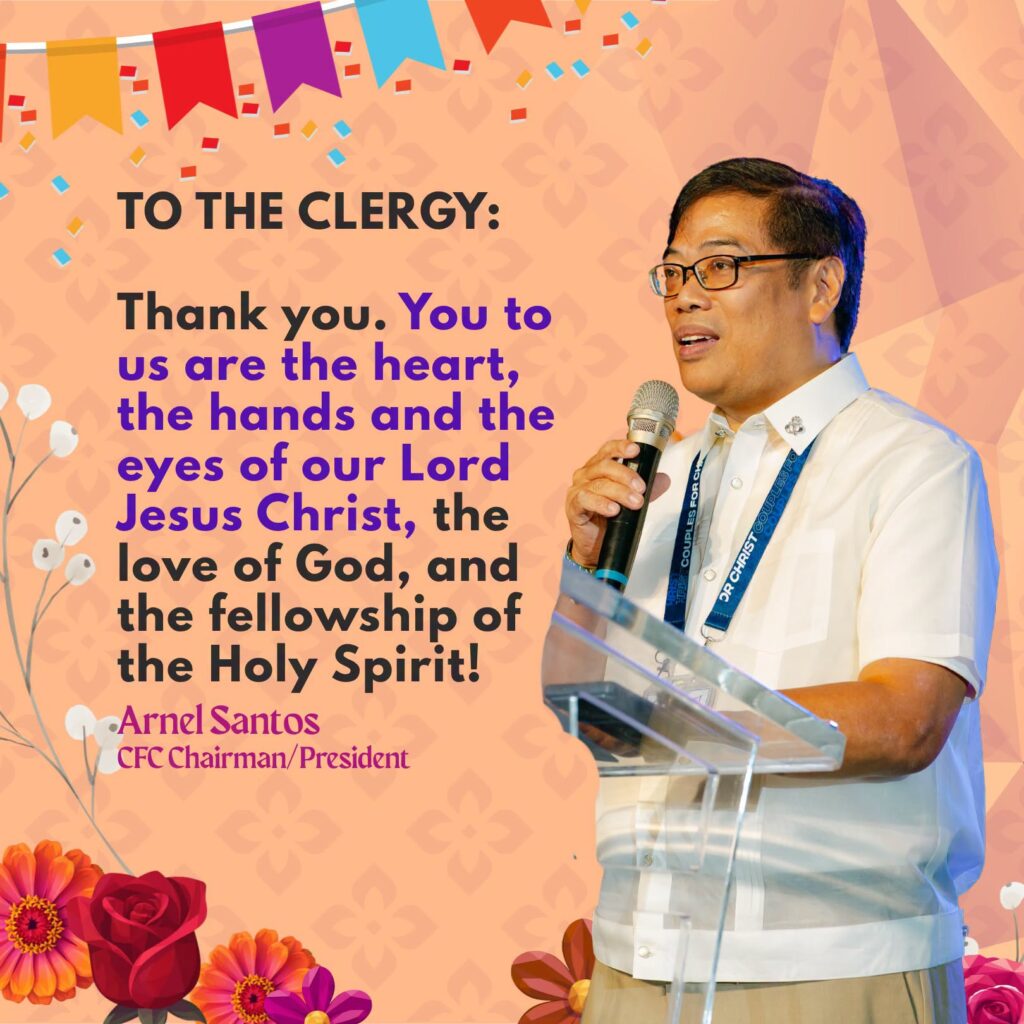
Santos spoke in length about the journey of faith of the lay faithful, whom St. Pope John Paul II described as the “humble yet great builders of the Kingdom of God in history” (Christifideles Laici) The lay, he emphasized, is CFC.
Addressing the clergy, he said: “You to us are the heart, the hands, and the eyes of our Lord Jesus Christ, and the love of God, and the fellowship of the Holy Spirit. Thank you for the correction, advice, teachings, self-offerings, and for accompanying us as our friends in our journey to God.” He invited those present to seize the chance to approach the clergy and personally thank them.
Heart for the Poor
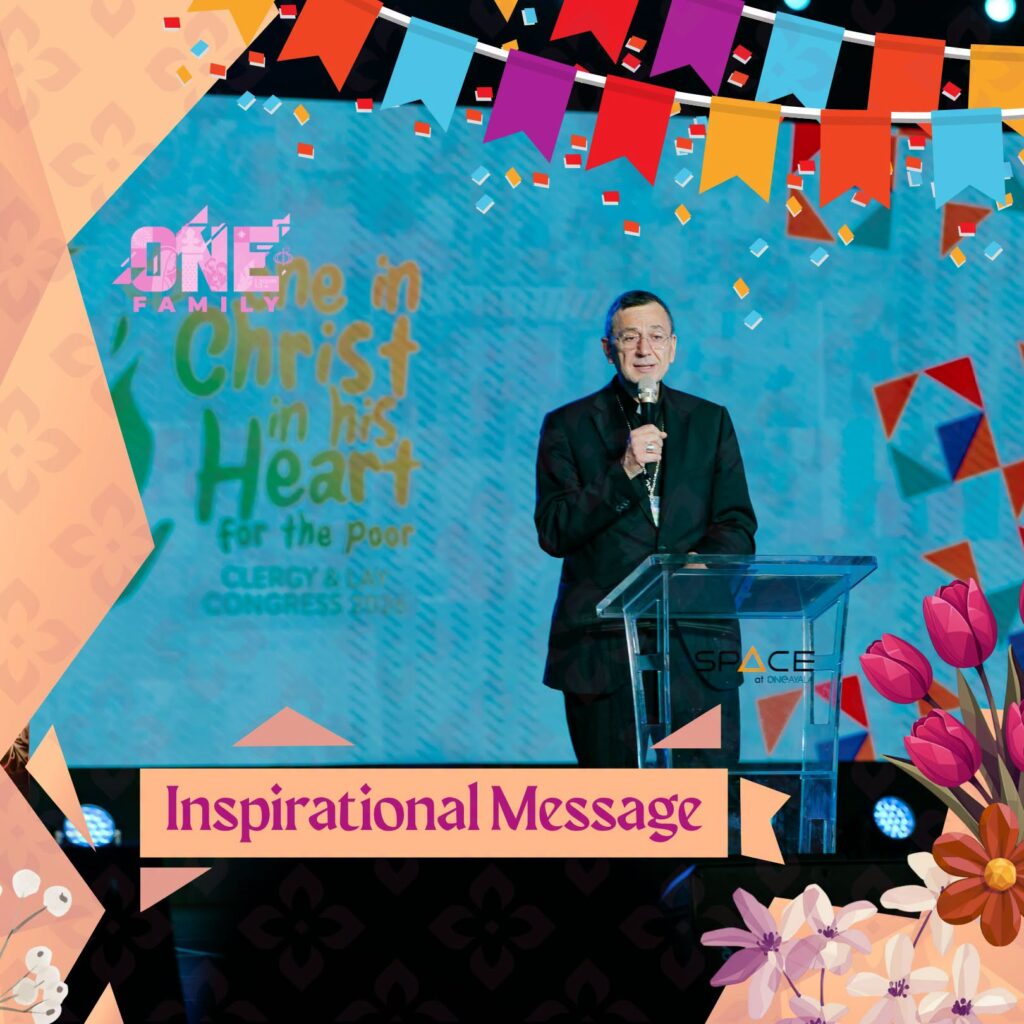
Santos then called on Bp. Gervasi to deliver an inspirational message, which focused on the three aspects of the theme for the Congress: One in Christ, In His Heart, and For the Poor.
Being “One in Christ,” it is fundamental for CFC to care for the poor, declared Bp. Gervasi. Referring to Dilexit Te, the Apostolic Exhortation of Pope Leo XIV, he said that the whole CFC movement finds its unity and strength in being united in Jesus. This unity is founded in God’s love. To be united to Christ, he explained, is to be united in His characteristics, including His being one with the poor. He emphasized that the poor are part of our family; they are one with us. “To touch the poor is to touch Christ.”
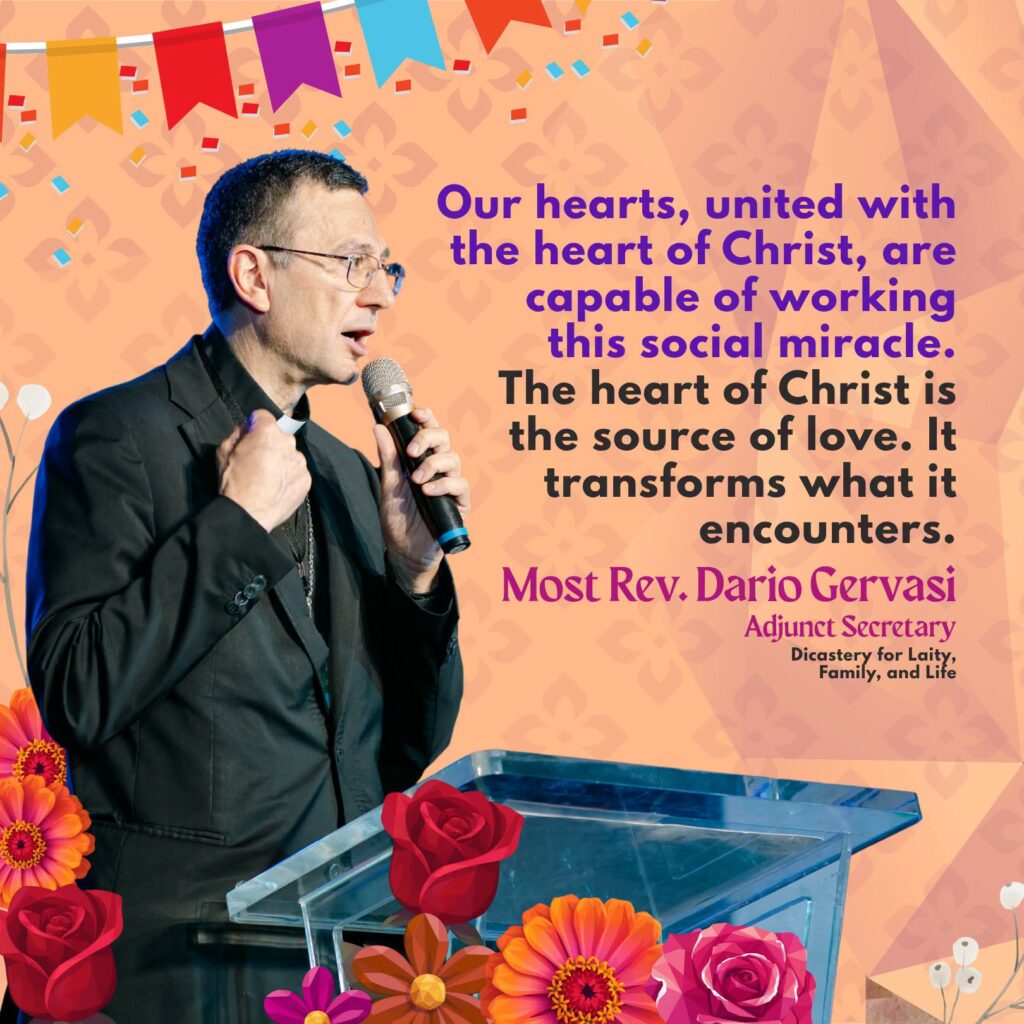
In discussing “In His Heart,” Bp. Gervasi referred next to Dilexit Nos, the Encyclical Letter of Pope Francis. He said that “our hearts, united with the heart of Christ, are capable of working this social miracle. The heart of Christ is the source of love. It transforms what it conquers.” He stressed that we cannot inflame the world with our love alone, but Jesus can do it through us. “Being close to the heart of Jesus means being able to love like Him.”
Finally, addressing the aspect of “For the Poor,” Bp. Gervasi explained that families united with Christ can become families that can welcome the poor, who are the very flesh of Christ. To welcome the poor is to enlarge the heart of the family, he said. By uniting their service, the lay and the religious can do so much more together.
In closing, he read a special message to CFC from Pope Leo XIV, in which the Holy Father extended his warm greetings and the assurance of his spiritual closeness to the community. The Pope expressed his prayer for couples to be united to the Lord, that their love may be perfected and their unity strengthened, and to become witnesses to the life-giving love of the Trinity. Finally, he bestowed his apostolic blessing on CFC.
Preferential Love for the Poor
One of the highlights of the Congress came next, in the person of Most Rev. Samuel Agcaracar, SVD, D.D., Bishop of the Diocese of San Jose, Nueva Ecija — the first homegrown bishop of the CFC community. A member of SFC Laoag from 1994 to 1999, Bp. Agcaracar admitted that the event was, for him, not just a gathering but a homecoming. “I join you not really as a guest speaker but as one whose vocation has been shaped by CFC.” He described his time in SFC as important formative years in faith and his first encounter with the vibrant CFC community. It was also during his SFC years that he received his calling, albeit as a late vocation. Thus, the CFC story is part of his story.
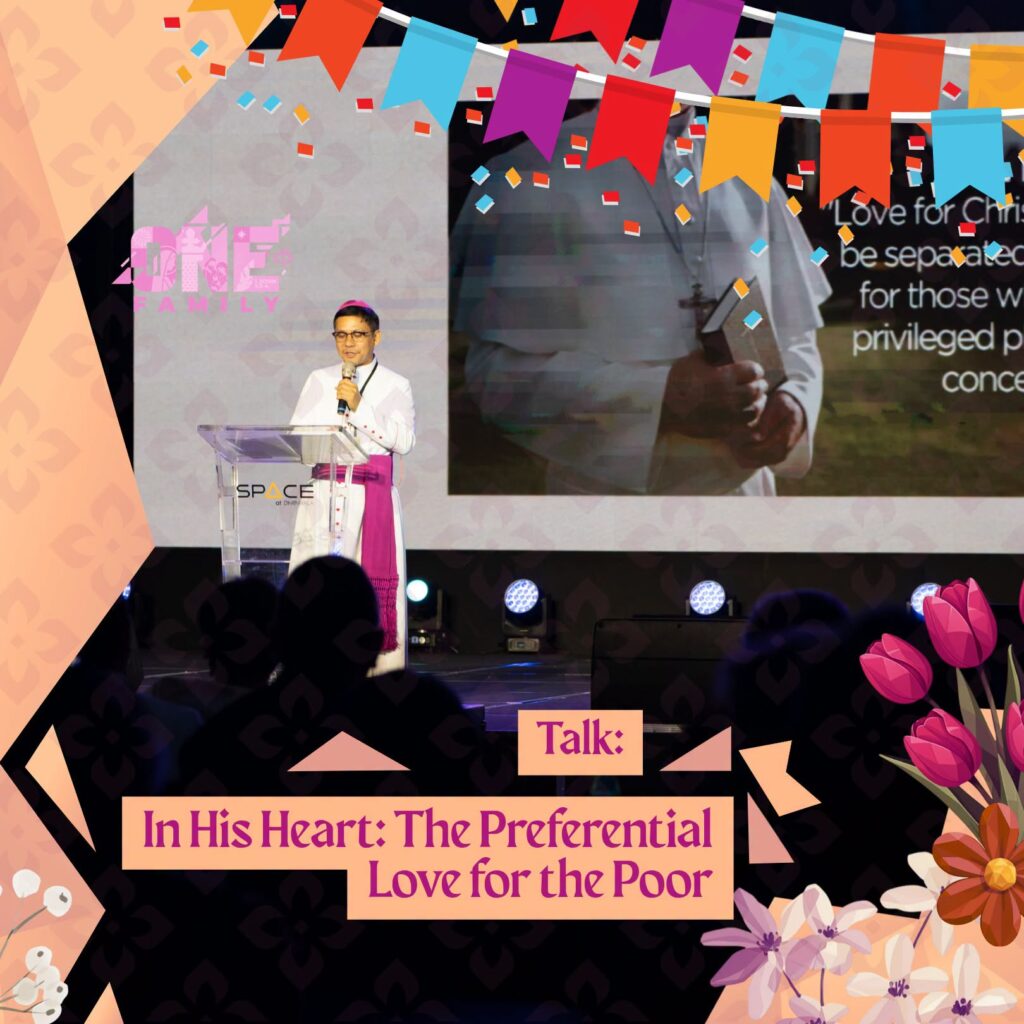
Bp. Agcaracar delivered his talk, entitled “In His Heart: The Preferential Love for the Poor,” in light of Pope Leo XIV’s Apostolic Exhortation Dilexit Te. He stressed that love for Christ can never be separated from love for those who hold a privileged place in his heart. “Every anniversary is a moment of remembrance but also a moment of discernment,” said the Bishop. “It is a time to look back and to give thanks.”
He noted with pleasure that the CFC community has gone from Ad Intra, that is, being gifted, to Ad Extra, sharing the gift. This move, he said, is not simply organizational; it is spiritual. It is not a departure from the community’s identity but rather its fulfillment. “Communities require roots before they can bear fruit,” he said. The question now is how to place this gift at the service of those who have not yet received God’s transforming love. This leads us to the Church’s preferential option for the poor, with whom Jesus Christ began His ministry and identified.
Bp. Agcaracar cited that in the Second Plenary Council of the Philippines, the challenge put forward for the Church was how to become not just a Church for the Poor but the Church of the Poor. He emphasized, however, that before people listen to our words, they want to know if we are willing to walk with them. He cited three attitudes that are needed to be able to minister to the poor: the willingness to embrace their reality, the willingness to learn, and the ability to see the poor as partners in mission, as fellow disciples and not as beneficiaries.
“The poor are witnesses of grace. Sometimes they evangelize us more than we evangelize them.” He added: “The kingdom of God is not built for the poor. It is built with them.”
He pointed out that many of us live with forms of poverty that are not immediately visible, such as poverty of gratitude and meaning. “There is material abundance but profound emptiness.”
“Love for the poor is about Jesus Himself,” said the Bishop. The Cross of Christ is the center of our faith, and the poverty of Christ on the Cross is the Church’s deepest source of wisdom. God did not save us from a distance. He entered our suffering, our conditions. “We are not spared from suffering, but we are also not abandoned,” he assured. “The crucified and risen Lord continues to walk with His people, to call disciples to mission.
He closed his talk by posing four challenges to the community: first, to move from gratitude to greater generosity; second, to go from receiving the Gift to sharing the Gift; third, to draw closer to those who occupy a privileged place in the Lord’s heart; and fourth, to walk with them not as beneficiaries of our kindness but as companions, teachers, and fellow missionaries.
The Response of CFC
In behalf of the CFC community, IC Member and ANCOP Chairman George Campos responded to Bp. Agcaracar’s talk by reiterating CFC’s commitment to the total liberation of the human person from anything that is not of God and to be instruments of God’s love. We are called, he said, not only to proclaim the Gospel in words but also to live it out in concrete acts, especially by being one with the poor.
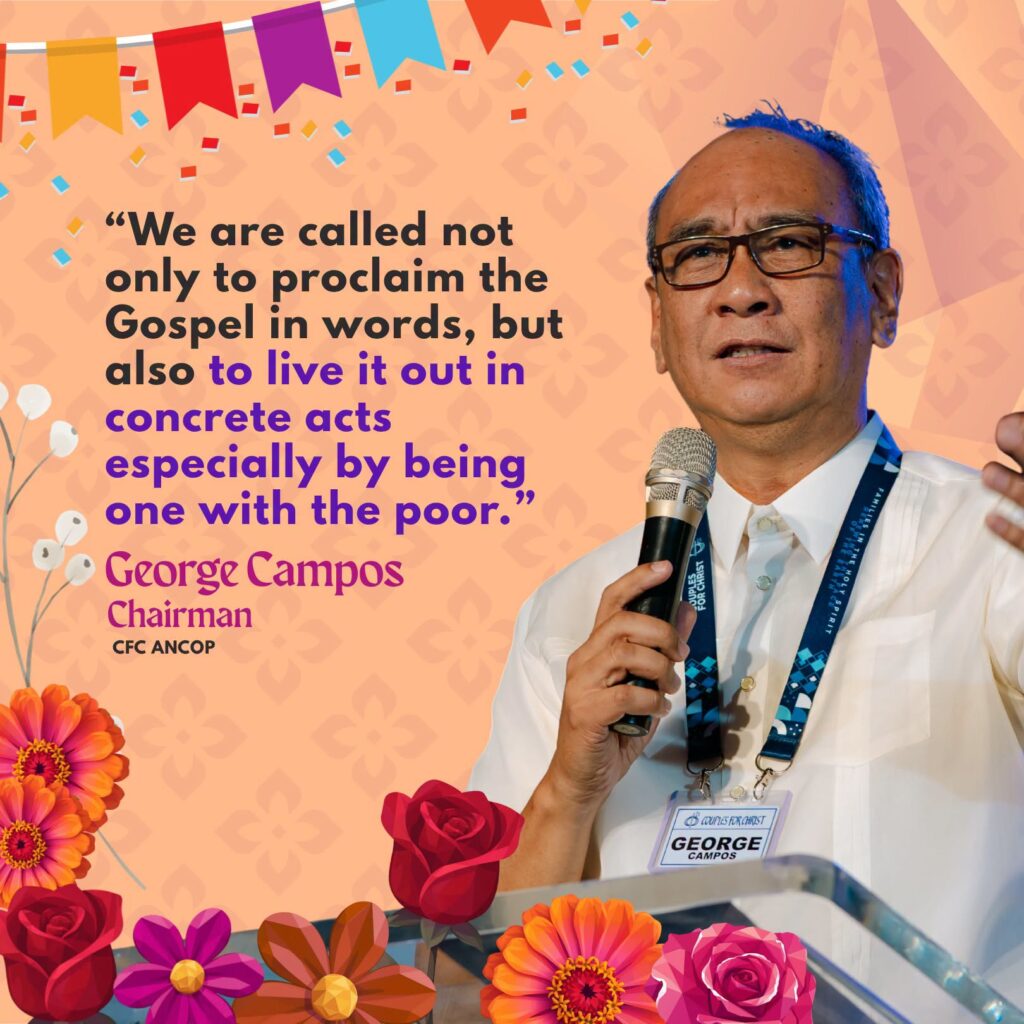
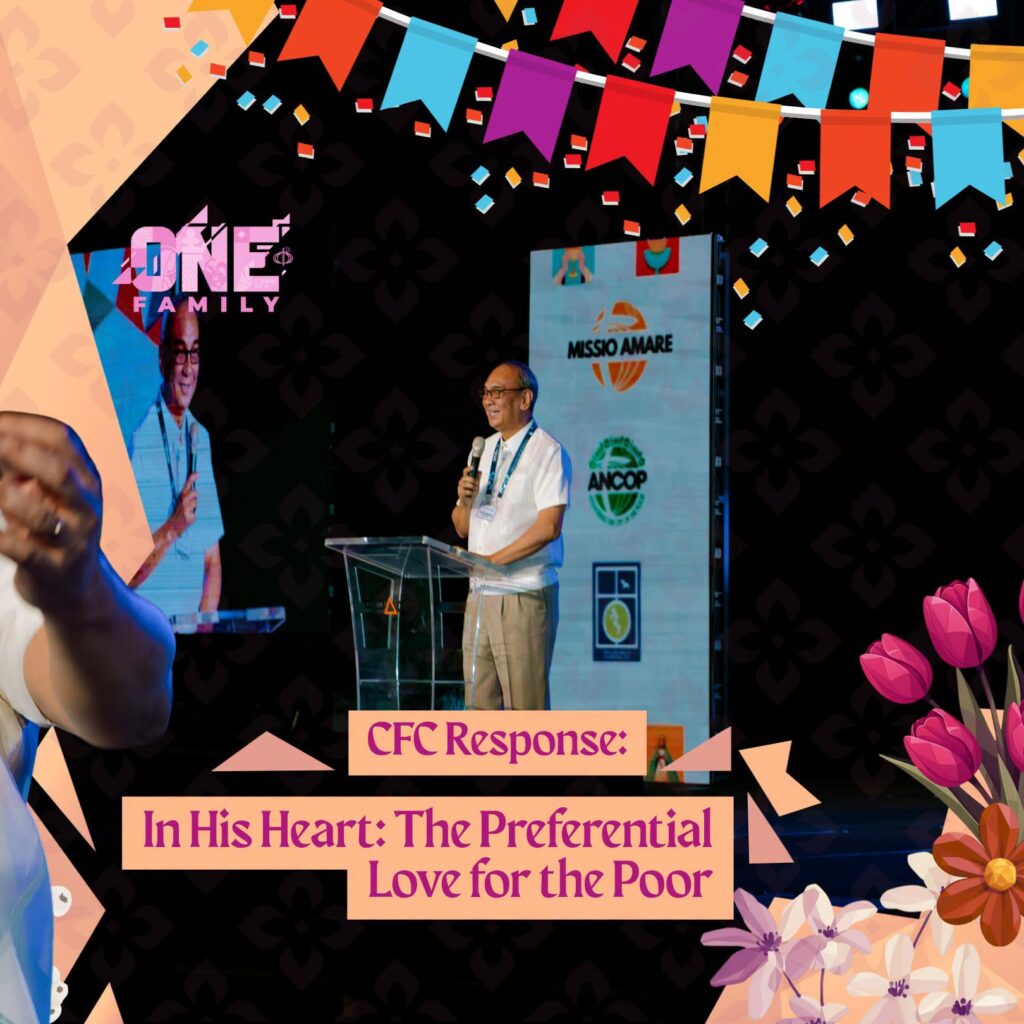
He shared about his personal encounters with the less privileged, having grown up with a mother who instilled in him a generous love for the poor. He spoke, too, of how such love was tested when he, along with his wife Cynthia, were assigned as Chapter Leaders in a dumpsite community.
He noted how, through the community, God has immersed us in the work for the poor, in particular through ANCOP, which currently supports 10,616 students in the elementary to college levels, in vocational and technical courses, and several seminarians, as well as the various social development programs under the umbrella of Missio Amare.
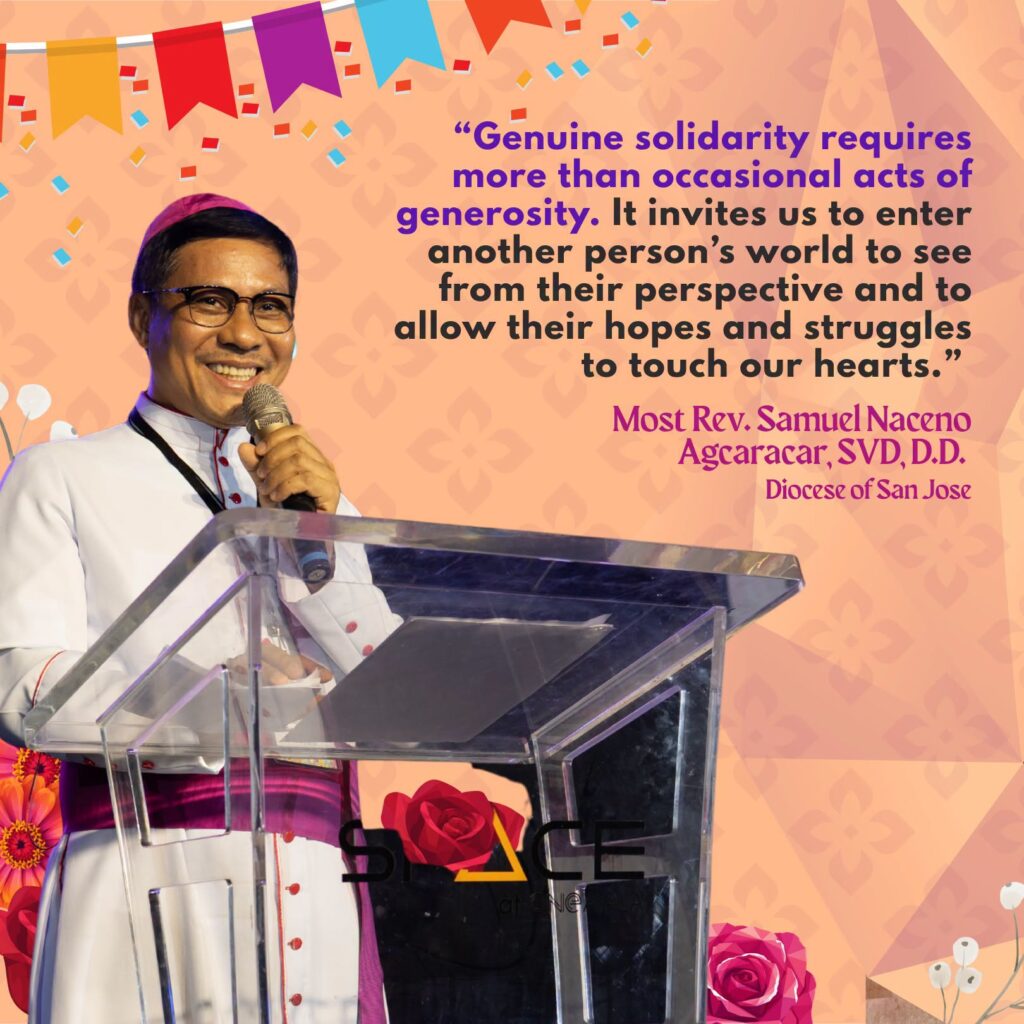
God’s love is not an abstract idea but a living reality, he said. “Genuine solidarity requires more than occasional acts of generosity. It invites us to enter another person’s world to see from their perspective and to allow their hopes and struggles to touch our hearts.” The poor, he added, are a gift to the CFC community and to the Church. “We thank the Lord for the opportunity to be a blessing and a conduit of God’s love and blessing.”
The Cry of the Poor, the Call of the Church
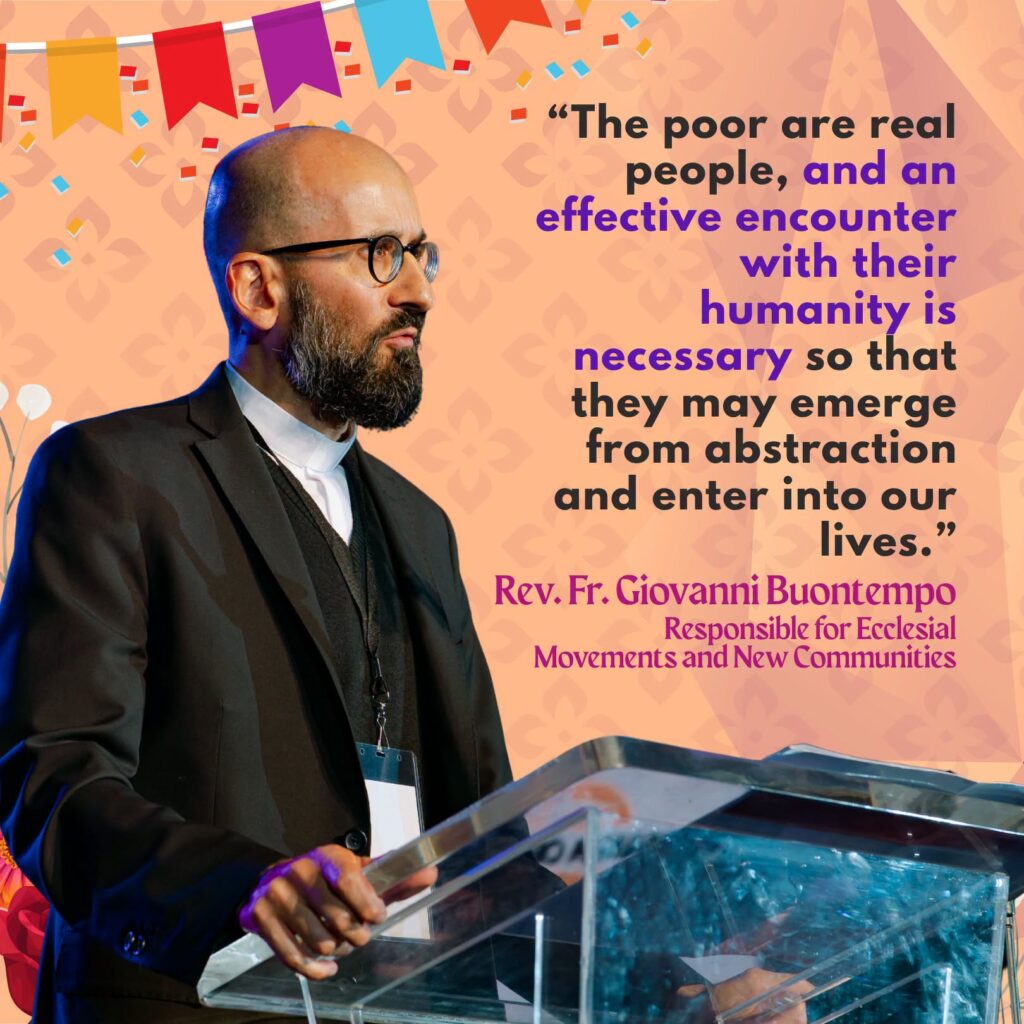
The second session was delivered by Msgr. Giovanni Buontempo, coordinator of the office responsible for relations with ecclesial movements and associations of the faithful. He highlighted stories of poverty he experienced in his early church ministry, where he first began to listen to the cry of the poor.
On the topic of personal encounters, Fr. Buontempo had this to say: “The poor are not an abstraction—an idea. The poor are real people, and an authentic encounter with their humanity [is needed] so that they may emerge from abstraction and enter our lives.” People often become deaf to the silent cries of our poor brethren because there is a lack of shared human and person-to-person encounters.
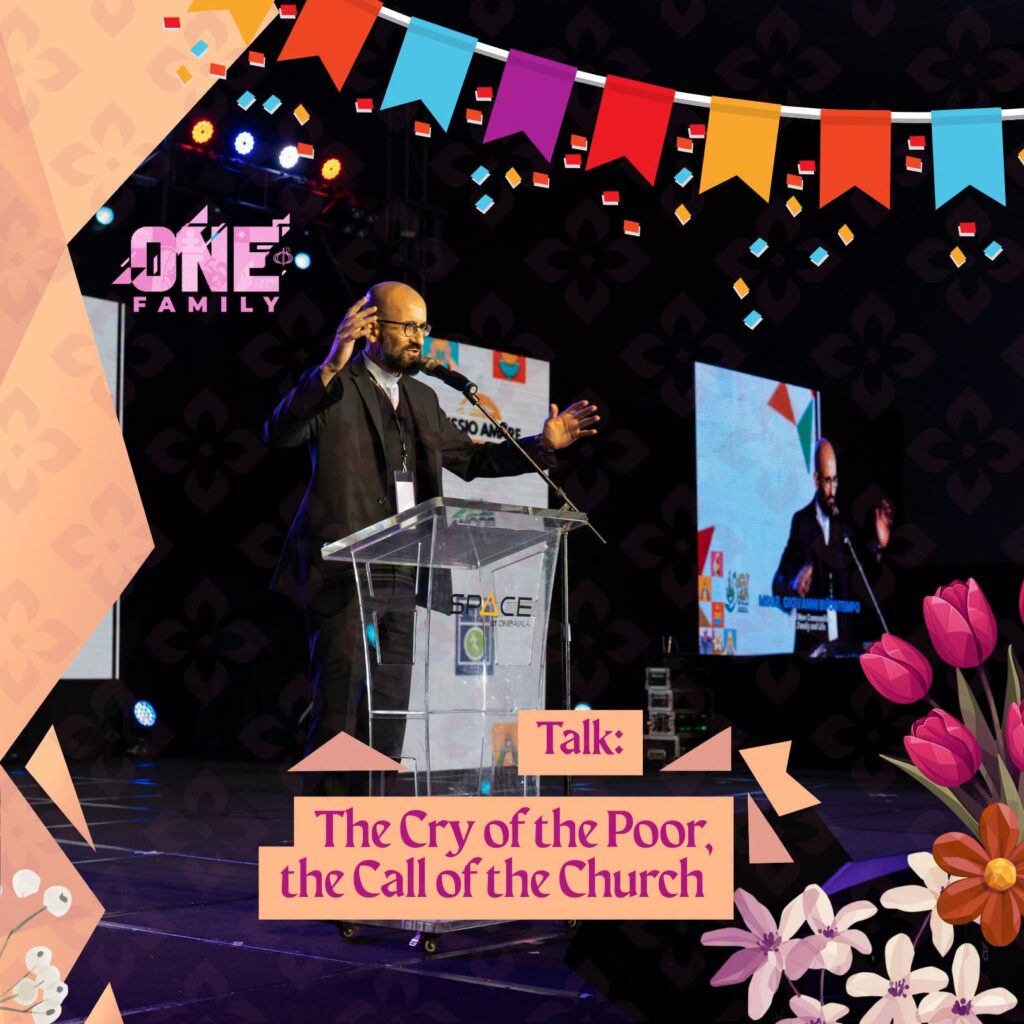
The cry of the poor is heard in many forms of poverty. First and foremost is material poverty or the lack of money and means to live. Second is moral poverty, which encompasses addiction to material and temporal things that lead to moral degradation and self-destruction. Lastly, there is intellectual poverty, where people live in utter ignorance. Since knowledge is needed to access work, intellectual poverty leads to material poverty as well.
Answering the question “What does it mean for us today to listen to the cry of the poor?”, Buontempo invited everyone to allow ourselves to be wounded by their sufferings and accept the weight of their anguish.
However, we must be wary of obstacles that may hinder us from doing this, such as superficiality—fleeting interactions without substance—and pursuit of personal well-being, the fixation of seeking pleasure and avoidance of uncomfortable circumstances.
Overall, the foundation of our care for the poor is our faith in Jesus Christ. Without love for Him, our love for the poor also fades. In caring for the poor, our spiritual lives grow tremendously by being victorious over selfishness and consolation from God that fills our souls from within.
The Response of CFC to the Cry of the Poor, the Call of the Church
The CFC response to Msgr. Giovanni’s session was given by International Council member and Missio Amare Chairman, Rey Reyes. He began with stating the two-fold mission of CFC, which is “Building the Church of the Home” and “Building the Church of the Poor”. Reyes called everyone to communion, not isolation. As a community, we are rooted in the example of Jesus, practicing both spiritual and corporal works of mercy.
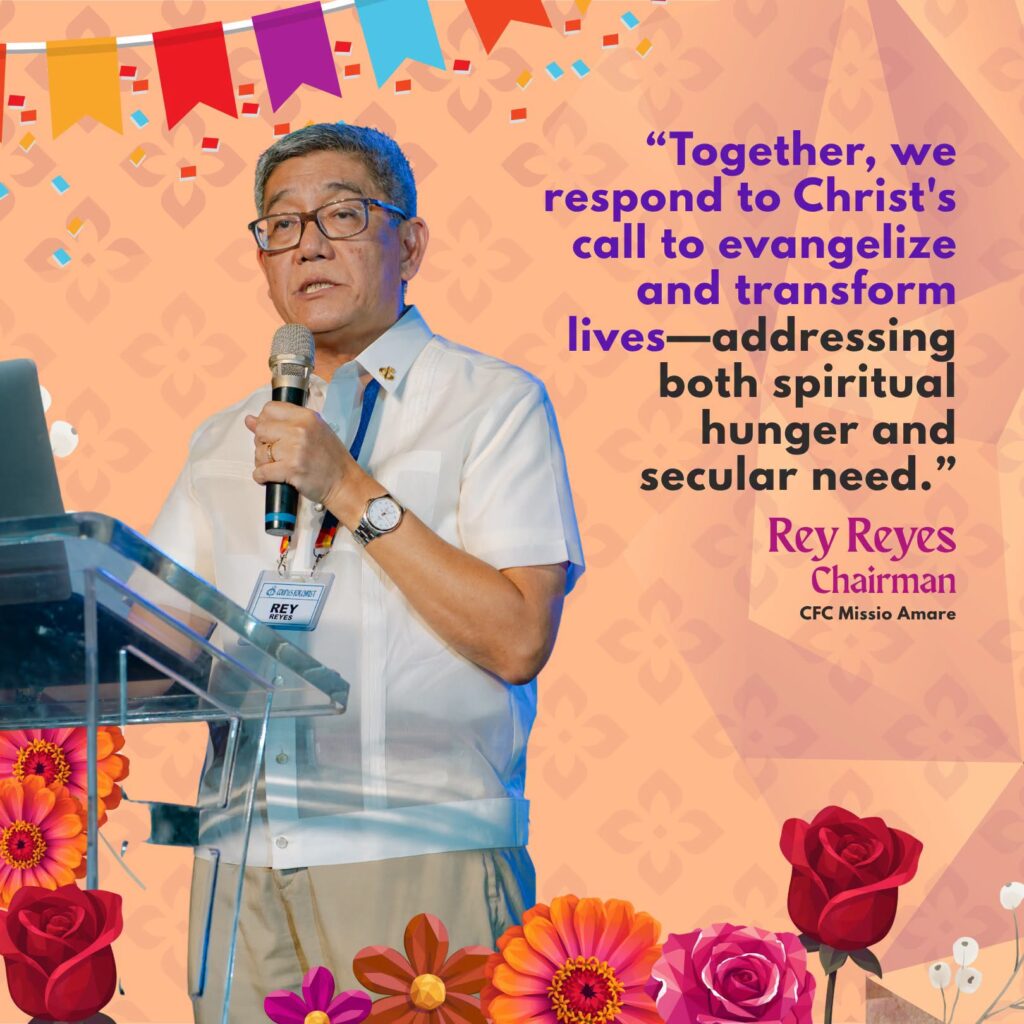
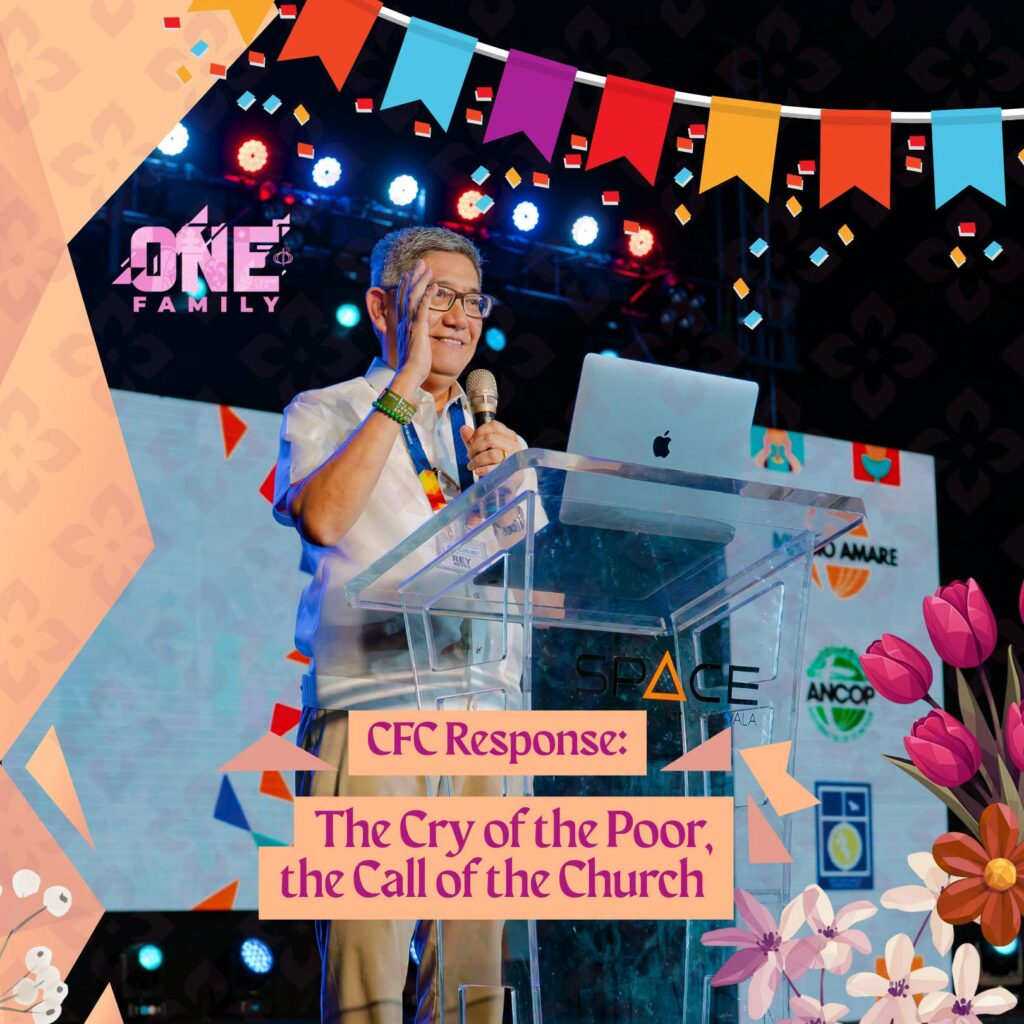
Building the Church of the Poor, Reyes stated “is more than a program. It is a living witness of Christ’s love.” As a community, Couples for Christ is blessed to have avenues that address the cry of the poor like ANCOP, Missio Amare, STMA, among others.
Reyes ended by enjoining the plenary to respond to God’s call to evangelize and transform lives by addressing both spiritual hunger and secular need.
Nurturing Vocations in CFC
Following the sessions and responses, a Eucharistic Celebration presided by Archbishop Francisco Escalante Molina, Apostolic Nuncio to Japan and Titular Archbishop of Gratiana. In his homily, the Archbishop brought up how the community has supported priestly and religious vocations not only through our programs, but through families who open their homes to seminarians and consecrated persons.
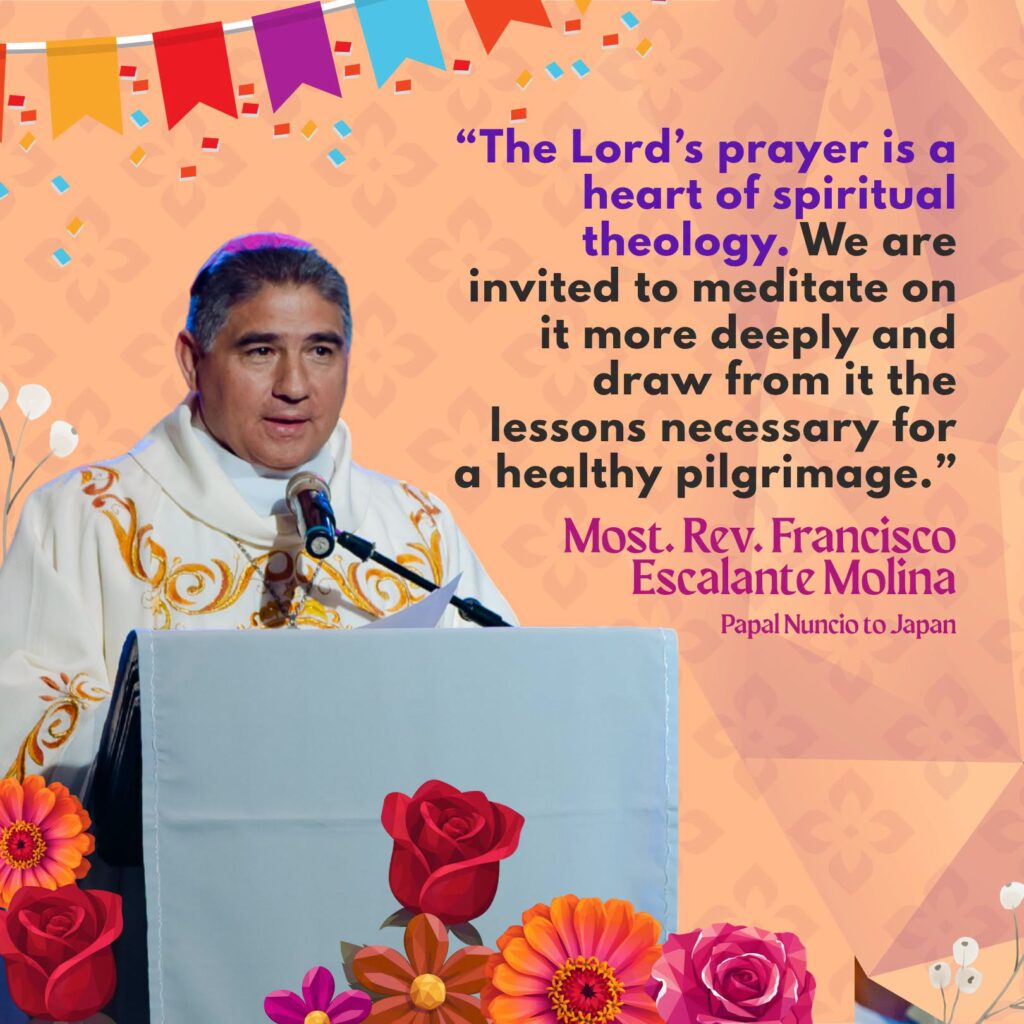
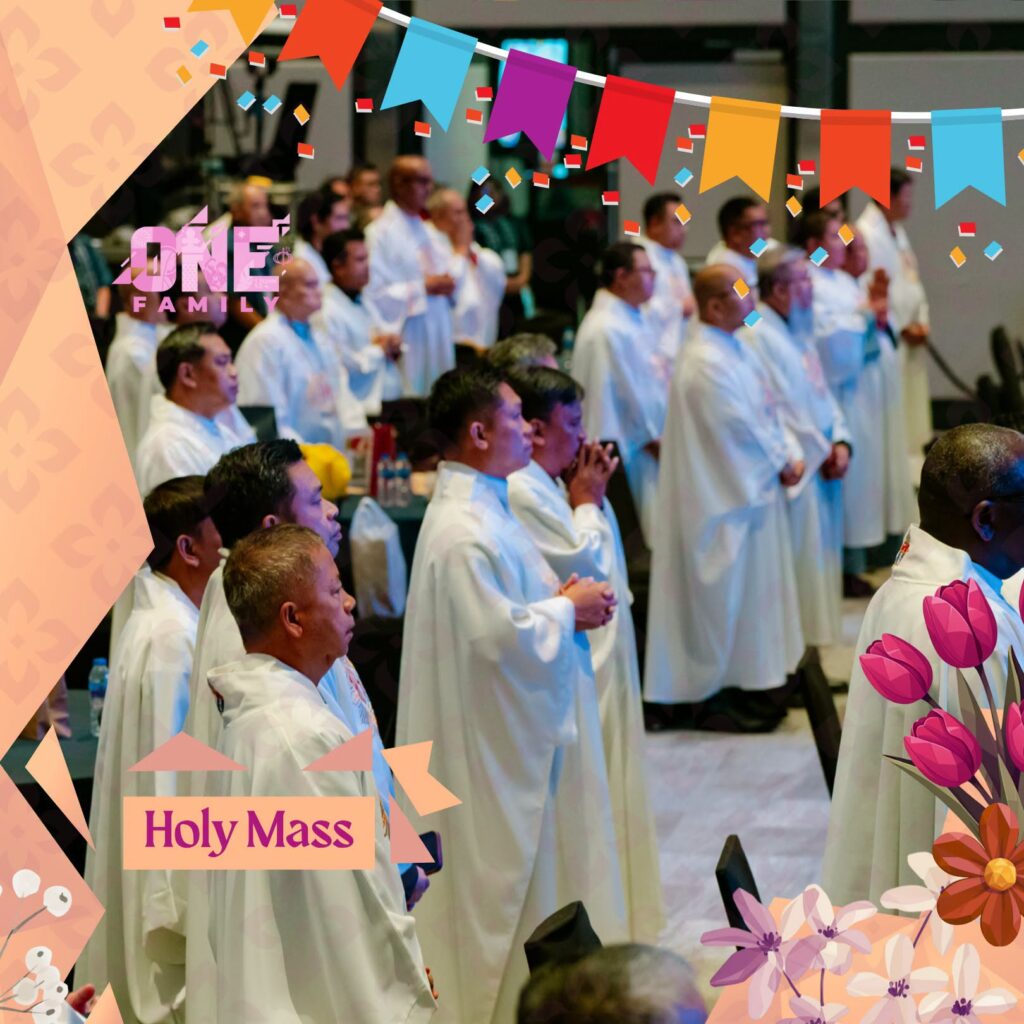
He also reiterated the Church’s need for families who are not afraid to offer their children to the Lord and who embrace spiritual vocations. These are the kinds of families CFC aims to build through marriage formation, youth evangelization, and embodied accompaniment of children and families.
The Clergy and Lay Coming Together as One Community
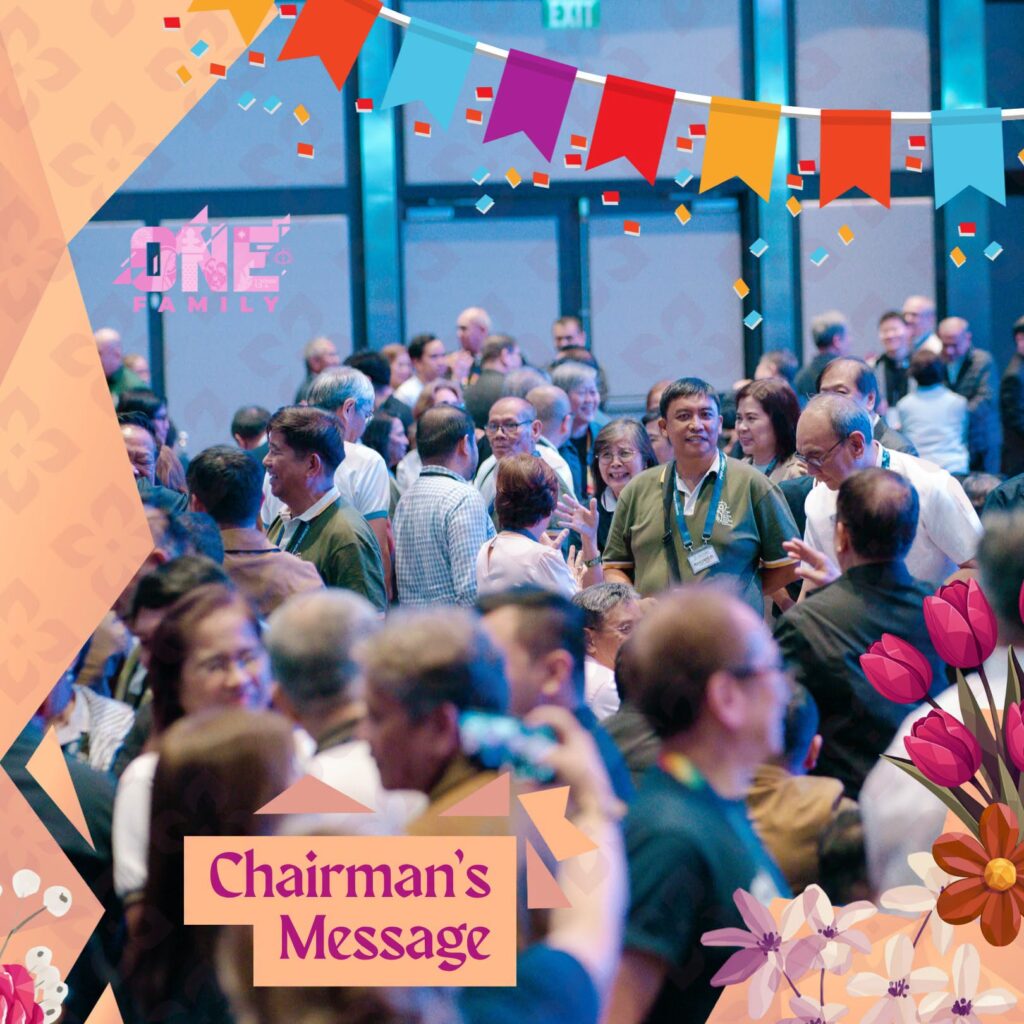
The congress was capped off with a night of fellowship where both members of the clergy and lay brethren enjoyed each others’ company. The sound of chatter over dinner was a beautiful melody of stories and experiences of love and mission in the people’s various vocations.
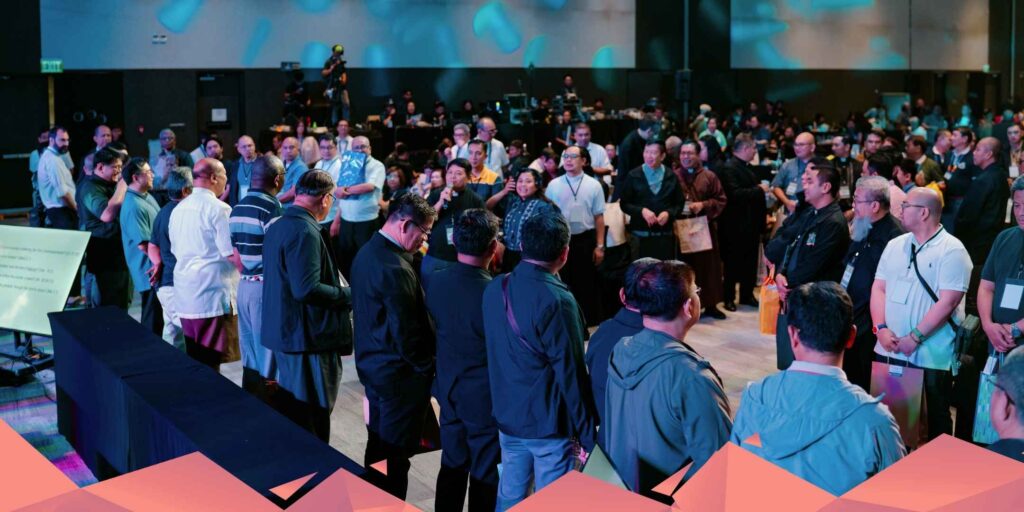
There was also singing, dancing, and games. A huge crown also gathered for a gift exchange activity, where everyone left with something to bring home. The laughter and smiles from everyone in attendance was a great picture of the Church in communion.